Acceptance and Commitment Therapy (ACT)
Is what you’re doing giving you a rich, full and meaningful life? If the answer is yes, then you probably don’t need to change anything or attend therapy. However, if the answer is no, you may want to consider therapy and this therapeutic approach in particular to maximise your potential for a rich, full and meaningful life.
We will all experience frustration, disappointment, rejection, loss and failure at some point in our lives. We will all experience aging, illness and injury also. Unfortunately, we will all face our own death and the death of loved ones. And on a regular basis, we will experience painful feelings that we wish would ‘go away’ – anger, hurt, shame, fear and sadness to name a few. Acceptance and Commitment therapy (ACT) is a model of therapy that teaches people how to handle these painful experiences and the thoughts and feelings that accompany them in a more helpful way.
ACT:
- Helps you to develop skills and strategies to deal with difficult experiences in a more helpful way so that they have less impact and influence over your behaviour, for example, avoidance.
- Helps you to clarify what is truly important and meaningful to you - i.e. your values - then use that knowledge to motivate you to change your life for the better and move towards those values.
ACT Hexaflex – The six core processes of Acceptance and Commitment Therapy (Harris, 2009)
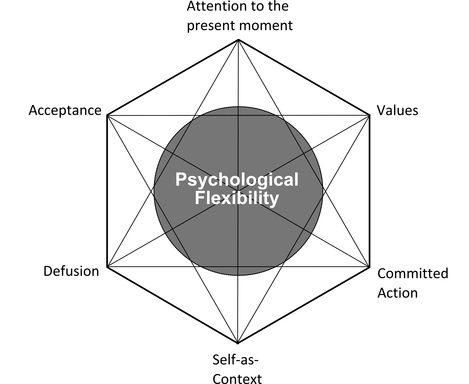
When you combine these processes together, you develop 'psychological' flexibility. This is the ability to be in the present moment, with awareness and openness, and commit to action guided by your values.
The greater your ability to be present, open and do what matters to you most, the greater the impact on your wellbeing and in turn, you will experience a better quality of life.
Person-Centred Therapy
Person-centred therapy is a non-directive therapeutic approach which is client-led, in the hope that through exploration clients may discover their own solutions to the difficulties that bring them to therapy. The therapist facilitates the session, listening to and understanding your thoughts and feelings without judgement, focusing on the present moment without direction. The aim of person-centred therapy is to encourage and support you in a process that facilitates self-discovery, self-acceptance, and provides a means toward healing and growth.
For person-centred therapy to be effective, therapists provide certain conditions:
- Unconditional positive regard: acceptance of the client in the here and now.
- Empathy: understanding clients’ thoughts and feelings; to perceive the world as the client sees it (Rogers, 1951).
- Congruence: being accessible to our clients through honesty and transparency; not adopting an ‘expert stance’.
Cognitive-Behavioural Therapy
Sometimes because of adverse life experiences such as physical, sexual or emotional trauma/abuse -or simply a proclivity toward negative thinking - you can become stuck in unhelpful and damaging cycles of behaviour; which leave you feeling helpless and frustrated.
Cognitive Behavioural Therapy (CBT) is a psychotherapeutic approach which aims to modify these patterns and any unhelpful beliefs underlying them.
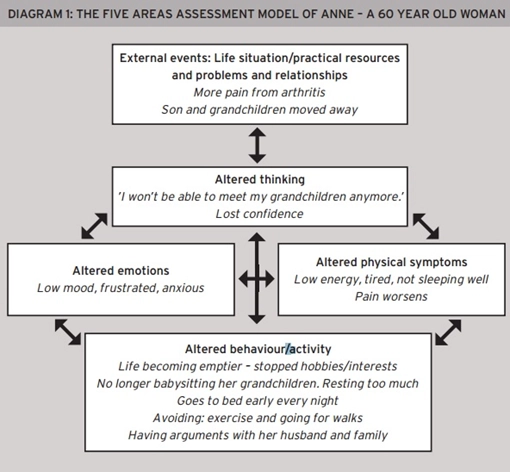
In CBT, you will learn to recognise how you think, behave and feel.
You will then be encouraged to consider alternative ways of thinking and behaving that are more in keeping with the reality of your situation.
Mindfulness
How often do we move through our life on autopilot? How much time do we spend 'in our head'?
When this occurs, it's easy for us to lose touch with the world around us, lost in thought, consumed with the next deadline, the next bill, the next confrontation.
Becoming Mindful can help us to increase our awareness of the present moment and by extension the positives in the world around us.
We can learn to realise our thoughts are simply 'mental events' and are not permanent; this allows us to detach ourselves from the cyclone of worry or anxiety that we would ordinarily become lost in.
Emotionally Focused Couples Therapy
“The most functional way to regulate difficult emotions in love relationships is to share them.”
(Dr. Love Sense: The Revolutionary New Science of Romantic Relationships)
Emotionally Focused Couples Therapy (EFT) draws on humanistic and systemic principles to help create a more secure attachment bond in a relationship. This approach is a highly researched, effective and evidence-based treatment which focuses on the emotional bond between partners, presuming that most relational problems arise from a disruption of this bond. Therapy is designed to create new cycles of bonding interactions in the couple and replace negative cycles such as pursue-withdraw or criticise-defend. These new positive cycles then become self-reinforcing and create permanent change.
There are three stages within Emotionally Focused Couples Therapy. The first stage is a de-escalation stage where we are looking at the cycle of negative interactions you and your partner get trapped and stuck in, focusing on the emotional realities that underlie this cycle. The main focus within this phase of the work is to change those negative patterns and create safety in your relationship. The second stage moves beyond de-escalation and helps a couple to create new patterns of interaction that act as an antidote to that negative cycle. Here we are not just creating new interactions between the couple, but specifically creating a more secure bond. The last stage of the therapy is consolidation of the changes the couple have made and explore how they have repaired their relationship.
Emotionally Focused Couples Therapy is a brief short-term therapy that typically takes between 8 to 20 sessions to move a couple through these three stages. As a rule of thumb, the first stage, de-escalation, generally requires 75% of the total number of sessions for a couple to de-escalate their emotional distress when triggered and reliably create emotional safety outside of the therapy office. Once that occurs, the second stage, deeply connecting/bonding, utilises all but a few of the remaining sessions set aside for the final stage – consolidating gains. A variety of confounding variables can increase the number of sessions needed.
For more information, please see the following video by Dr. Sue Johnson, the Founder of Emotionally Focused Therapy for Couples:
More Articles …
Trauma-Focused Therapy and EMDR
Past experiences don't always stay in the past.
Traumatic or overwhelming experiences can influence your emotions, beliefs, relationships and responses long after the event itself. You might understand logically that you are safe now, for example, while finding that your mind or body continues to react as though the danger is still present.
EMDR (Eye Movement Desensitisation and Reprocessing) is an evidence-based psychological therapy that can help people process distressing experiences and reduce the impact they continue to have in the present.
EMDR may be helpful for difficulties related to trauma, childhood adversity, relational trauma, anxiety linked to past experiences, shame, self-criticism and emotional overwhelm.
How We Can Help
EMDR & Trauma-Focused Therapy
Specialist psychological therapy for trauma, PTSD, complex trauma, difficult past experiences and patterns that continue to affect you in the present.
Individual Psychological Therapy
Individual therapy for adults experiencing anxiety, emotional overwhelm, relationship difficulties, health-related concerns or other psychological difficulties.
Adult ADHD & Autism Assessments
Neuroaffirmative psychological assessments for adults seeking greater clarity and understanding of their individual strengths, experiences and support needs.
Clinical Supervision
Reflective, supportive and clinically informed supervision for psychologists and other psychological practitioners.
EMDR Individual & Group Supervision
Specialist EMDR supervision and mentoring with Dr Áine Lombard, EMDR Europe Accredited Practitioner and Consultant in Training.
Supportive individual and small-group supervision for EMDR practitioners seeking to strengthen their clinical skills, confidence and reflective practice.
What Clients Say

After receiving psychological help for 5 years, it was Dr Aine’s EMDR therapy sessions that truly helped me to organise and process traumatic memories regarding my first child. I was amazed, and initially emotionally overwhelmed, by the impact this form of therapy has had. I look forward to moving on and enjoying a more positive relationship with my children. Thank you, Dr Aine'
Client A

'I found the whole EMDR therapy to be a very positive experience. I felt very supported comfortable and safe within the therapy sessions. As it was a whole new experience from counselling sessions I was apprehensive about the fact that the EMDR sessions would be online but this was unfounded on my part as the therapy was amazing and worked just as well as being in a room with the therapist like other forms of therapy'.
Client B

'Dr. Áine helped me identify childhood trauma which was continuing to impact my relationships and self-esteem throughout adulthood. Using EMDR I was able to process these childhood memories which has enabled me to break the negative thought patterns stemming from them and rebuild my self-esteem.’
Client C

'The support that I received from Dr. Liam was excellent and he has given me tools to manage my anxiety while driving and drive with more confidence. It was lovely speaking with him as he was so professional, kind and empathetic. I will not hesitate to use this service again for anything that life may throw at me'.
Client D
Considering Therapy?
If you're considering psychological therapy, you can choose a free 15-minute suitability call or book an initial 60-minute psychological therapy appointment online. If you would prefer to ask a question first, you can also send us an enquiry.